Wednesday 25 February 2026


From ‘VIBGYOR’ to now ‘VIBGYORO’: Scientists Discover New Color 'Olo'
Share

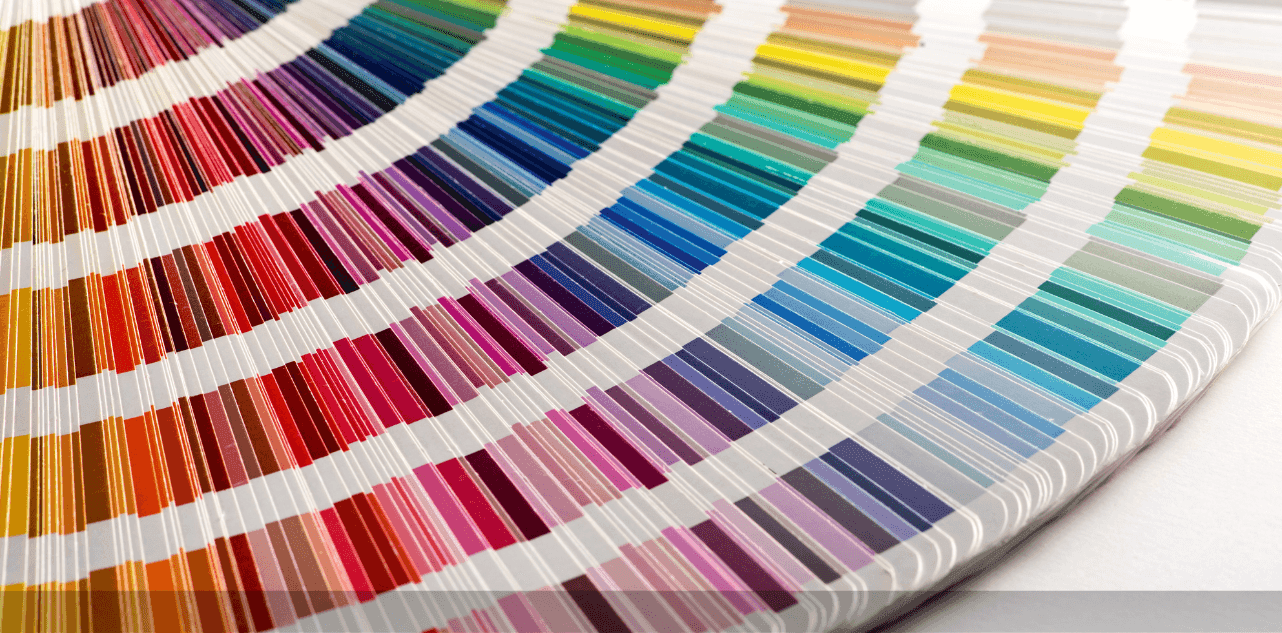
Since our early school days, in this or previous centuries, our teachers always told us about seven persistently visible rainbow colors- Violet, Indigo, Blue, Green, Yellow, Orange, Red. To make these remember well in a sequential order, learners are still guided with a coined word structured with all seven initial letters of each as “VIBGYOR”. But, will this age’ old concept go on or get changed to “VIBGYORO”?
Why we are stressing about this new ‘coinage’ of word is because the scientists have now also searched out and discovered a new color called- 'Olo'. It had never been earlier seen by humans.
Color “Olo”has recently been revealed through laser manipulation of the retina, allowing five researchers to perceive the color. It is described as an extremely saturated teal or peacock blue. The color can’t be seen on screens or in everyday life, as it bypasses the natural limits of human vision.
This color was unveiled through a study published in “Science Advances” only a few days back. The unique shade, described as “jaw-droppingly” vibrant, is said to resemble peacock blue or teal, but with an intensity far beyond anything currently perceivable through conventional means.
According to researchers, only five people have seen "Olo" so far, and that too, under very specific and controlled scientific conditions. The color was observed through laser manipulation of the retina, using advanced technology to stimulate specific cells in the eye and push the boundaries of visual perception.
“We predicted from the beginning that it would look like an unprecedented color signal, but we didn’t know what the brain would do with it,” said Ren Ng, electrical engineer at the University of California, Berkeley. “It was jaw-dropping. It’s incredibly saturated.”
To achieve this, scientists used lasers to directly target 'M cones', the color-sensitive cells in the retina responsible for perceiving medium wavelengths. Typically, natural light stimulates either the L (long) or S (short) cones, responsible for red and blue perception, respectively, but never M cones in isolation.
This innovative approach allowed the scientists’ team to induce an entirely new visual experience.
Despite sharing an image of a turquoise square as a reference, researchers clarified that the true essence of "Olo" cannot be captured on screens. “There is no way to convey that color in an article or on a monitor,” said Austin Roorda, a vision scientist involved in the study. “The color we see in the image is a version of it, but it absolutely pales by comparison with the experience of the new color."
However, this mysterious new color can never be seen in everyday life yet. “We’re not going to see ‘Olo’ on any smartphone displays or any TVs anytime soon. And this is very, very far beyond VR headset technology,” the researchers said.
Thus, in a breakthrough that sounds straight out of science fiction, scientists in the US have enabled five people to perceive this completely new color — one that no human being has ever seen before. It is described as a highly saturated blue-green.
In fact, human eyes detect color using three types of cone cells — L (long), M (medium), and S (short) — which are sensitive to red, green, and blue light respectively. Normally, these cones work together, and the brain interprets the combinations to form the entire color spectrum, that one sees every day.
But, in nature, it's impossible to activate just one cone type — like the green-sensitive M cones — without also activating the others. That overlap limits the range of color human can perceive.
Using advanced laser technology and eye-tracking systems, researchers were able to selectively stimulate only the M cones, bypassing the usual mix. The result was a vibrant blue-green hue that doesn’t exist anywhere in the natural world.
So, now this color — outside the natural range of human perception — has been formally named 'Olo'.
The scientists call their method 'Oz', a new principle for displaying color imagery by controlling individual cells in the retina.
Their paper notes that this breakthrough allows for a partial expansion of the human color space and demonstrates that new colors can be perceived by targeting individual photoreceptors. In fact, they were even able to show images and videos using 'Oz colors' by aiming laser microdoses at thousands of identified cones.
The results are being seen as proof-of-concept that the human eye can be programmed to see colors beyond its natural limits — a development that could open up new possibilities in vision science, displays, and immersive media. According to scientists, this could just be the beginning!
Researchers assert that this color can only be experienced through laser manipulation of the retina.
However, as per a worldwide survey and certain obscurities, blue is the most popular color in 10 countries across four continents – including China.
Red and blue (or violet) wavelengths are two opposite extremes on the spectrum. When one sees both of these wavelengths in the same place, eyes and brain don't know what to do with them, so they compensate, and the clashing wavelengths register as the color we call purple. It doesn't actually exist. So, Purple Isn't Real, Science says. Brain just makes it up.
In small quantities water appears colorless, but water actually has an intrinsic blue color caused by the slight absorption of light at red wavelengths. For larger bodies of water—ponds, rivers, lakes, and oceans—water appears blue on clear days because it mirrors the blueness of the sky.
Newsletter
Stay up to date with all the latest News that affects you in politics, finance and more.