Sunday 22 February 2026


Pahalgam Attack: UP Businessman's Wife Treasures the Shirt he Last Wore
Share

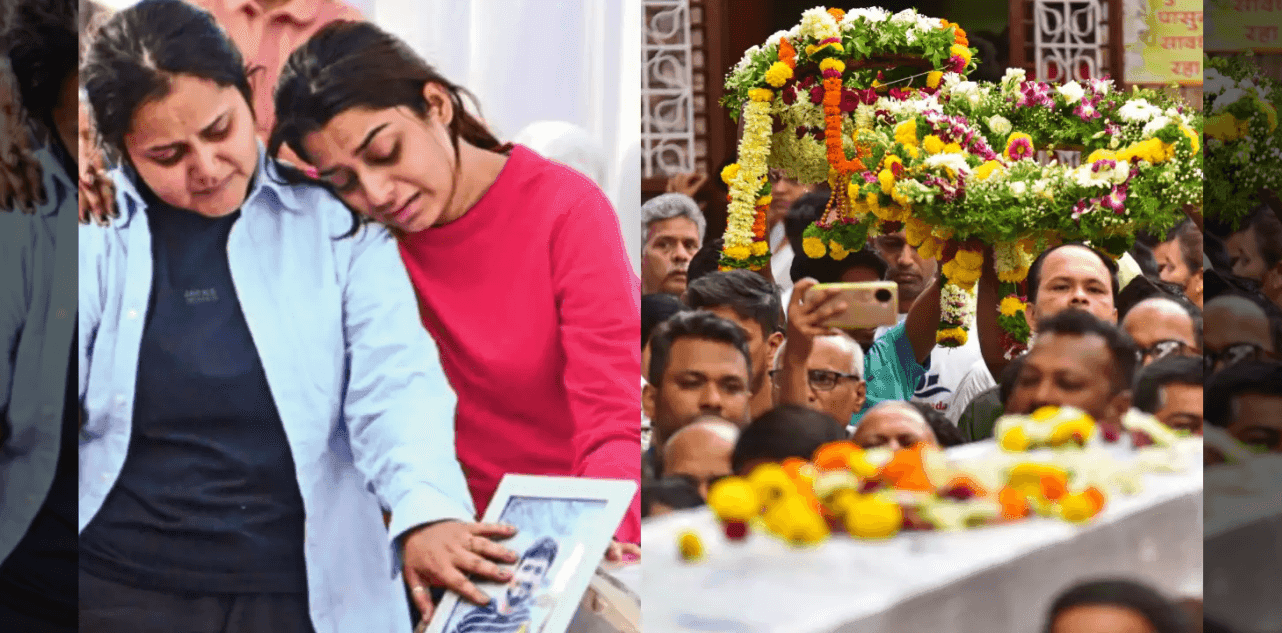
In the somber lanes of Kanpur, a heart-wrenching farewell unfolded on Thursday, as the sky-blue shirt of Shubham Dwivedi became a symbol of eternal love and loss. Draped across her shoulders like a second skin, Aishanya Dwivedi clung to the shirt as if trying to hold on to the man she had lost—her husband, her partner, her everything. Just over two months into their marriage, Aishanya was now a widow, her world turned upside down by an act of terror in the serene valley of Kashmir.
As Shubham’s coffin lay before her, Aishanya stood motionless, her gaze distant and hollow. She finally removed the shirt when the funeral procession began to move, pressing the soft cotton fabric to her face, sobbing uncontrollably. By dusk, as the tears slowed and grief settled into silence, the neatly folded shirt rested gently on her lap—a keepsake of a love cruelly interrupted.
Shubham Dwivedi, a 31-year-old businessman from Kanpur, had planned a peaceful getaway to Kashmir with his newlywed wife and father-in-law. The trip had been going smoothly, filled with joy and shared moments. But on Tuesday, the serenity of Pahalgam’s Baisaran meadow was shattered by gunfire that claimed Shubham's life.
Recounting the harrowing moment, Aishanya, 27, shared her trauma with a voice heavy with disbelief. "We had just ordered Maggi and were sitting on the grass. Dad had gone to the washroom," she said. “Suddenly, a man appeared behind us and asked if we were Hindu or Muslim. He told me, 'If you are Muslim, recite the Kalma.' I was confused, but addressed him as 'bhaiya' and asked why he wanted to know. When I told him we were Hindu, he shot Shubham in the head without hesitation.”
Her voice cracked as she repeated the moment that would haunt her forever—the split second that turned a honeymoon into a nightmare.
As Shubham's body returned to his hometown, the city of Kanpur was engulfed in mourning. His funeral procession saw hundreds of citizens gather in a united display of grief and solidarity. Along the path to Dydhi Ghat, where the final rites were performed on the banks of the Ganga, people lined the streets and climbed onto rooftops, some holding placards that read, "Stop terrorism". Markets across the city remained closed in protest, marking a collective condemnation of the senseless violence that claimed an innocent life.
The air was filled with sorrow and anger as chants for justice echoed through the streets.
During a visit to Shubham's home, Uttar Pradesh Chief Minister Yogi Adityanath met with the grieving family. A visibly distraught Aishanya demanded action, urging the state to deliver a “befitting reply” to those responsible. CM Yogi assured her and the people of Uttar Pradesh that justice would not be delayed or denied.
“The terrorists and their handlers will face strict retribution,” the Chief Minister declared. “This barbarity—this cruelty that strips Hindu women of their sindoor—will not be forgotten or forgiven. India will ensure justice for Shubham and for every family that has suffered.”
The brutal killing of Shubham Dwivedi is not just a story of personal loss—it is a chilling reminder of the persistent threat of terrorism. His death, in the backdrop of a peaceful vacation, highlights the vulnerability of ordinary citizens in conflict zones. As India mourns the loss of yet another innocent life, there is a renewed call for unity, justice, and stronger action against those who disrupt peace through violence.
For Aishanya, the memories are all that remain—a sky-blue shirt, a promise never fulfilled, and a love story written in tears. And for Kanpur, and indeed the nation, Shubham becomes a symbol of both sacrifice and the enduring spirit of resilience.
Newsletter
Stay up to date with all the latest News that affects you in politics, finance and more.